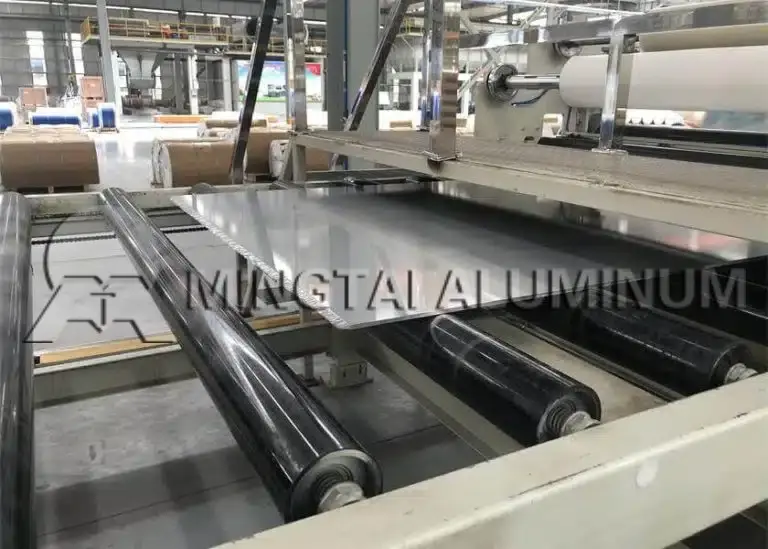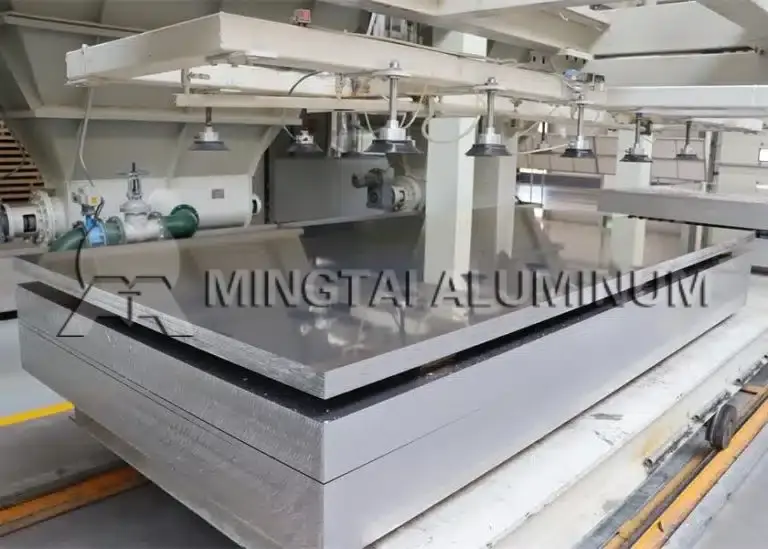
6061 aluminum sheet is stronger than 6061 aluminum plate. 6061 aluminum plate is strengthened and has good mechanical, corrosion, machining, and welding properties. It is widely used in applications in the fields of transportation, machinery, building, electronics, and engineering. The term 6061 aluminum sheet is defined by specific tempers, thicknesses, surface finishes, and methods of production, each with its own uses.
Our Guide to 6061 Aluminum Sheet lists the key properties of 6061 aluminum sheet and goes on to describe typical products made from 6061 aluminum sheet. It outlines the various tempers in which 6061 aluminum is made and gives some practical advice as to which to select for various applications of aluminum 6061 sheet. Reference data is included to aid the buyer in comparing products to buy.
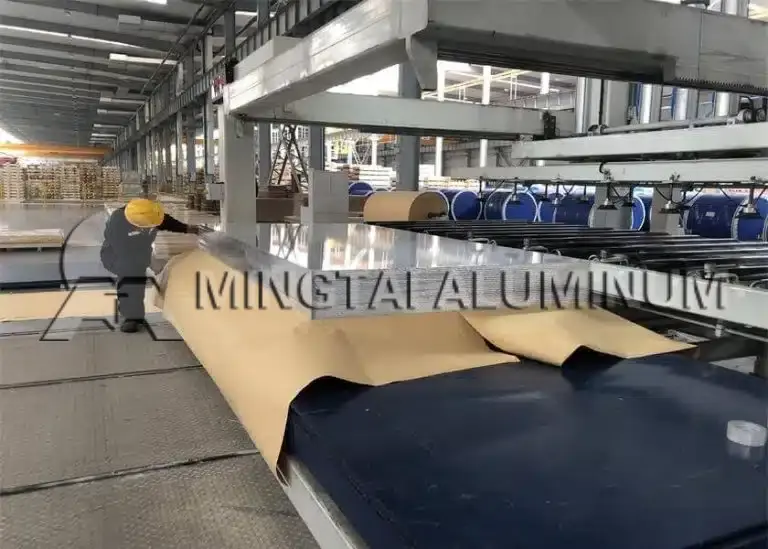
What Is 6061 Aluminum Sheet?
6061 aluminum is a 6000-series aluminum alloy containing magnesium and silicon. As 6061 aluminum is heat-treated, the magnesium and silicon in the alloy combine to form magnesium silicide. 6061 aluminum has high strength, excellent corrosion resistance, and good fabricability.
The typical 6061 aluminum composition includes:
*Magnesium: 0.8%–1.2%
*Silicon: 0.4%–0.8%
*Copper: 0.15%–0.40%
*Chromium: 0.04%–0.35%
*Iron: up to 0.70%
*Zinc: up to 0.25%
*Manganese: up to 0.15%
*Titanium: up to 0.15%
*Aluminum: balance
These values are general reference ranges. Buyers should check the relevant standard and mill test certificate before buying material for a critical job.
A common question is, “What is 6061 T6 aluminum?” The “6061” names the alloy. The “T6” describes its temper. T6 material has been solution heat-treated and artificially aged to raise strength and hardness. So 6061 T6 aluminum sheet is not a separate alloy. It is one heat-treated condition of the same alloy.
What Are the Main 6061 Aluminum Sheet Properties?
6061 is well balanced for its mechanical properties. It offers strength, low weight, good corrosion resistance, and easy machinability.
How Strong Is 6061 Aluminum Sheet?
Mechanical properties vary with temper, thickness, product form, and the governing specification. Typical room-temperature values for 6061-T6 sheet include:
*Ultimate tensile strength: approximately 290 MPa
*6061 aluminum yield strength: approximately 240 MPa
*Elongation: commonly about 8%–12%, depending on thickness
*Elastic modulus: approximately 69 GPa
*Density: approximately 2.70 g/cm³
These are typical reference values, not guaranteed design values. Engineering work should use the minimum values listed in the relevant standard or supplier documents.
The strength-to-weight ratio suits parts that must stay light yet remain reliable in structure. Welding can lower strength in the heat-affected zone. So post-weld design conditions need attention.
What Is the Hardness of 6061 Aluminum?
Hardness affects scratch resistance, machining behavior, forming ability, and wear performance. A harder temper helps with machined or structural parts. A softer condition works better when extensive bending or forming is needed.
How Does It Perform During Fabrication?
Aluminum 6061 sheet can be cut, drilled, milled, turned, and welded with standard industrial methods. T6 offers good machining performance. Annealed or partially hardened conditions allow better forming.
The AlSi7Mg alloy is usually welded with the GTAW or GMAW process. What is important is the right filler material and the corresponding process control. The strength of the weld is not as strong as the T6 heat-treated base material. Additionally, the parts must be checked for dimensions and for potential distortion during welding and subsequent heat treatment.
Where Is 6061 Aluminum Sheet Commonly Used?
6061 aluminum sheet has a wide variety of applications that showcase its versatility. This aluminum alloy can be used for applications requiring moderate to high strength and excellent corrosion resistance, among others. It is ideal for projects that require a reasonable cost for fabrication.
Typical applications include:
*Vehicle floors, body panels, frames, and structural supports
*Marine fittings, decks, walkways, and non-critical structural components
*Machine guards, platforms, fixtures, and equipment panels
*Electrical enclosures and electronic housings
*Architectural panels, stairs, railings, and support structures
*Aerospace ground equipment and selected non-flight-critical components.
*Sporting goods, bicycle parts, and recreational equipment
*Molds, tooling plates, and precision-machined components
While 6061 aluminum may be used for most types of outdoor usage, it should not be subjected to aggressive seawater or to highly corrosive chemicals on a permanent basis. Special surface treatments, special coatings, or even other aluminum alloys can be required for particularly demanding applications.
MINGTAI ALUMINUM supplies a full range of 6061 sheet products to suit all processing requirements and end uses. When requesting a quotation for supply of 6061 sheet, please advise intended application, required temper, size, tolerances, and applicable standard.
How Do 6061-T6 and Other Tempers Differ?
When Should You Choose 6061-T6?
6061-T6 is well suited for parts that require high strength, excellent dimensional stability, and good machinability. Structural brackets, parts, and frames for machines, as well as panels for durable equipment, are typical applications.
T6 material is harder and less ductile than annealed sheet, so it does not suit every forming operation. Tight-radius bends may crack if bend orientation and minimum radius are not controlled properly.
When Are Softer Tempers More Suitable?
6061-O is fully annealed and gives the greatest ductility. It suits severe forming, though its strength is much lower than T6 material.
6061-T4 is solution heat-treated and naturally aged. It offers an intermediate mix of strength and formability. It can help when a part needs more forming than T6 allows but still requires greater strength than the annealed condition.
The best temper should match the manufacturing sequence. If extensive shaping is needed before final strength is reached, a softer condition followed by controlled heat treatment may be the right path.
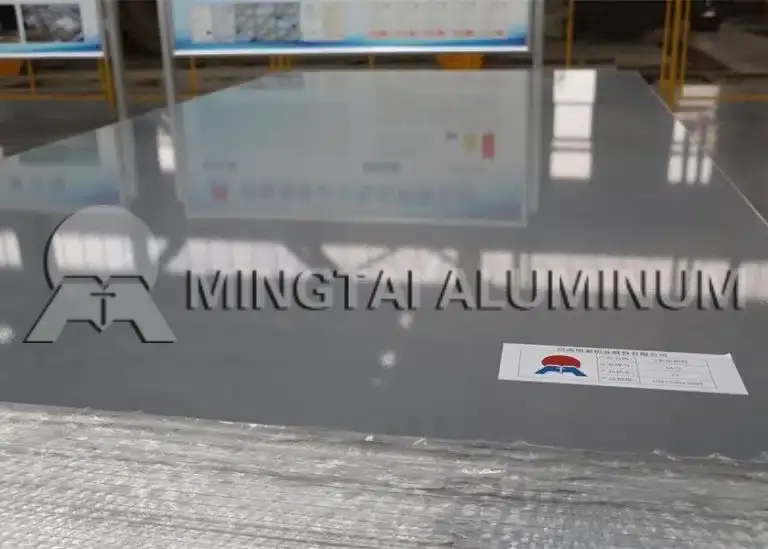
How Can You Choose the Right 6061 Aluminum Sheet Metal?
Start with the service needs of the finished part. Determine the expected loads, exposure conditions, fabrication processes, appearance needs, and target service life before specifying the material.
Important selection factors include:
1.Temper: T6 for parts that require high strength and subsequent machining. T4 is a good combination of strength and formability. O temper for parts that are to be formed to stringent specifications.
2.Thickness: Sheet must be stiff enough and have sufficient load-carrying capacity without being too heavy. Check if the quoted thickness is nominal and what tolerance is allowed.
3.Dimensions: Standard sizes may cut cost and lead time. Custom widths and lengths can reduce waste but may involve minimum-order rules.
4.Surface condition: Mill finish is enough for many industrial parts. Decorative, anodized, coated, brushed, or protective-film surfaces may be needed for visible components.
5.Fabrication method: Various processes such as bending, welding, machining, punching, and laser cutting have different requirements for the sheet. The bend radius and bend direction also vary for T6 products.
6.Specification: Within the domestic market, typical listings for aluminum sheet and plate are generally ASTM B209. There are many other national standards as well as industry-specific standards that may be required for particular projects.
7.Documentation: Request chemical composition and mechanical property records when traceability is important.
MINGTAI ALUMINUM's team members are ready to help customers select the appropriate temper, thickness, surface finish, and dimensional tolerances. Providing more technical information at the inquiry stage reduces the risk of selecting an unsuitable product that is difficult to form or cannot carry the required loads.
What Should Buyers Verify Before Placing an Order?
A purchase specification should clearly state the alloy, temper, dimensions, quantity, applicable standard, surface requirements, and testing or certification needs. If flatness, thickness tolerance, or appearance is critical, these requirements should be agreed upon before production.
Buyers should also confirm whether “sheet” or “plate” terminology applies under the selected standard. The distinction is generally based on thickness, but limits can vary by specification and market.
Cutting allowances, bend radii, strength loss due to welding, surface finish, and packaging all need to be considered when producing fabricated parts. All of these factors affect the part’s function and ultimately its cost. MINGTAI ALUMINUM uses verified design values and makes sample parts for particularly bending-heavy, tolerance-critical, or unusual applications.
FAQ
Q: What Are the Typical 6061 Aluminum Sheet Properties?
A: DENSITY of material = 2.70 g/cm3. Resistance to corrosion, weldability, and machinability are all good. Typical T6 values for tensile strength, yield strength, and Brinell hardness are 290 MPa, 240 MPa, and 95 HB, respectively. The guaranteed values may vary from the typical values depending on the thickness of the material and the governing standard.
Q: Is 6061 T6 Aluminum Sheet Easy to Bend?
A: 6061 T6 aluminum sheet can be bent. But because of higher hardness and lower ductility than other common aluminum grades, sheet of this grade can develop cracks when bent to very tight radii. Bend radius, grain orientation, and tooling all affect bending of sheet made from 6061 T6 aluminum. Forming of this grade of aluminum is generally best done with 6061–O or 6061–T4
Q: How Do I Choose the Correct 6061 Aluminum Sheet Metal Thickness?
A: Factors that must be taken into account when choosing the thickness of a roof structure are expected loads, span, required stiffness, form of the roof, and maximum acceptable weight. For structural calculations, the values from the material standard applicable to the material in question must be used. The buyer must also check the thickness tolerances, as the delivered thickness may deviate from the nominal value within specified limits.