Choosing a reliable 5086 aluminum sheet supplier affects more than the quoted cost. Alloy 5086 stands out for its strong corrosion resistance. It also offers good weldability and useful strength. These traits suit marine work, transportation, chemical plants, and outdoor gear. The right supplier must show control over alloy chemistry, temper, dimensions, surface quality, documentation, and delivery. This guide helps purchasing teams compare aluminum sheet suppliers. It also helps them build a specification that performs well in production.
What should you verify about 5086 aluminum sheet?
5086 aluminum sheet is a non-heat-treatable magnesium alloy. Its performance depends on magnesium content, temper, thickness, and fabrication route. Compared with softer commercial-purity sheet, 5086 gives higher strength. At the same time, it keeps good resistance to seawater and many atmospheric conditions. It can be welded, formed, machined, and finished. Still, the final properties need to match the service condition. Ask each 5086 aluminum supplier to state the alloy standard, temper designation, nominal thickness, thickness tolerance, and mechanical property range.
Do not judge a sheet only by a headline tensile value. Yield strength, elongation, flatness, bend radius, and weld-zone behavior often matter more in a finished assembly. For tanks, decks, enclosures, and brackets, share the drawing or load case early. This lets the supplier recommend a realistic gauge and temper. Our technical team at MINGTAI ALUMINUM uses these inputs to match material selection with forming and joining needs.
How can you compare an aluminum plate supplier beyond price?
Low Price Quote: A low quotation may omit inspection, edge work, protective film, export packaging, and correct temper. Compare suppliers of aluminum plates with a line-by-line offer. A line-by-line offer should include alloy, temper, thickness, width, length, surface finish, quantity, standard, delivery time, and packing. Then compare the total delivered cost, not only the unit price. This approach makes a 5086 aluminum sheet price easier to read. It also cuts down on later change orders.
Which cost factors change 5086 aluminum sheet price?
The main drivers are raw-material market conditions, sheet thickness, order volume, cutting yield, temper processing, surface protection, testing, and freight. Narrow or custom-cut sizes often carry more conversion loss than standard mill widths. Small trial orders may also carry a higher unit cost. This happens because setup and packing costs spread across fewer sheets. Ask whether the quote covers certificates, inspection reports, palletization, moisture protection, and replacement terms for nonconforming material.
What commercial terms should be fixed?
Confirm the quotation validity period, currency, delivery basis, payment milestones, tolerance rules, and claim window. Define how shortages, transit damage, mixed lots, and delayed certificates will be handled. A dependable supplier will answer these points before the purchase order. It will not treat them as informal promises.
Which quality documents should aluminum sheet suppliers provide?
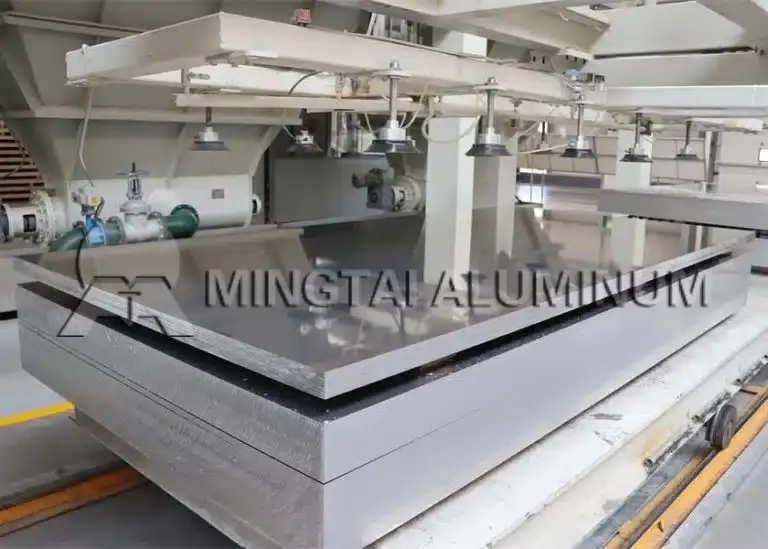
For production use, traceability matters as much as appearance. Require a mill test certificate or equivalent document. It must link each bundle to alloy, temper, heat or lot number, chemical composition, and mechanical results where needed. Dimensional inspection records should be added for critical work to verify thickness, width, length, flatness, and squareness. Coated, brushed, or film-covered sheets must indicate the acceptable cosmetic class and film adhesion requirements.
A supplier should also explain its inspection workflow, calibration controls, and nonconformance process. Review our quality assurance and service process to see the type of evidence that can support incoming inspection and supplier qualification.
How should you assess production and delivery capability?
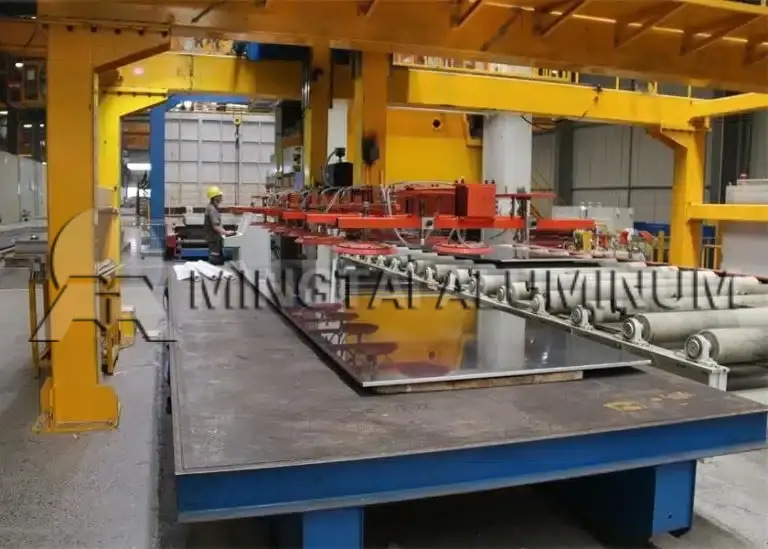
Reliable aluminum sheet suppliers make capacity visible. Ask about monthly rolling capacity, standard lead time, peak-season planning, and the equipment used for leveling, cutting, and packing. Check whether the supplier can repeat the same width, temper, and finish across multiple releases. Consistency matters when a project uses replacement panels or phased construction.
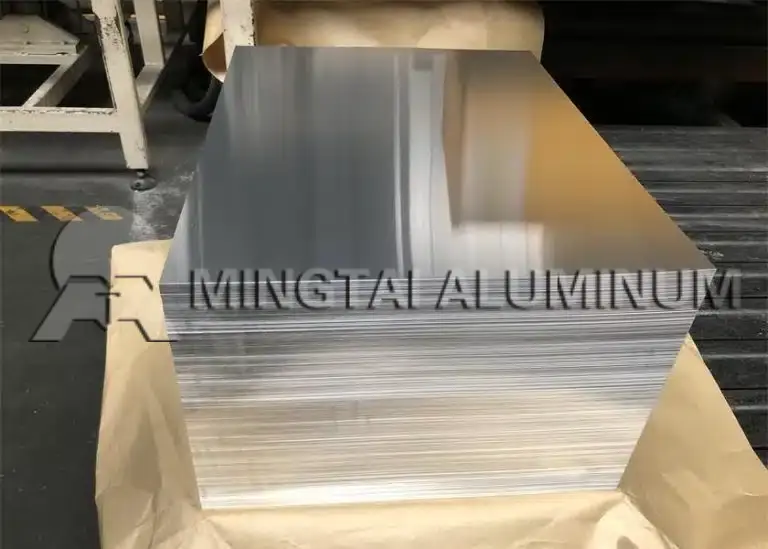
Packaging forms part of product quality. Bundles should be secured against shifting. They must be protected from rain and condensation. They should also carry labels with alloy, temper, size, quantity, and lot information. Edge guards and suitable skids reduce handling damage. For overseas shipments, request photos of the packing method. Agree on documentation before dispatch. Our aluminum sheet packaging guidance covers this topic in detail.
If a supplier cannot explain how it prevents water staining, abrasion, or mixed-lot confusion, treat that as a qualification risk. This holds even when the material test report looks correct.
What questions should you ask before approving a 5086 supplier?
Use a short technical audit. Ask for recent certificates, sample inspection data, a drawing review, and references for comparable thicknesses or applications. Confirm whether the supplier can provide trial sheets before a full production order. Also check whether retained samples are available for dispute resolution. Discuss welding, forming, and storage conditions. Poor handling after delivery can create problems that get blamed on the alloy by mistake.
For alloy selection and fabrication planning, consult our aluminum alloy selection guide and record the approved values in the purchase specification.
How should your final purchase specification be written?
State the alloy as 5086 aluminum sheet. Then list out the following details for the 5086 aluminum sheet: temper, nominal thickness and minimum thickness, width and length, edge condition, surface finish, flatness, quantity, required inspection, required certificates, method of packaging, and expected delivery date. Lists should include acceptable tolerances and the method of inspection for each dimension that is to be checked. Special notes for items to be formed, such as minimum bend radius, type of joint, etc., and any cosmetic restrictions after forming. A clear specification lets suppliers quote the same requirement. It also gives your receiving team an objective basis for acceptance.
Compare at least two qualified aluminum sheet suppliers by using the same checklist of parameters. Select the supplier that offers documented quality, stable, repeatable production, a clear 5086 aluminum sheet price, and good technical service support. As a professional aluminum extrusion products manufacturer, MINGTAI ALUMINUM can efficiently coordinate custom dimensions, required test reports, and packing for export in accordance with the customer’s production schedule.
FAQ
Q: What makes 5086 aluminum sheet different from other marine-grade sheet?
A: Its magnesium-based alloy design provides a useful balance of strength, weldability, and corrosion resistance. These traits work well in marine and outdoor environments. The correct temper and thickness still depend on the design load and fabrication method.
Q: How can I compare a 5086 aluminum sheet price fairly?
A: Compare the same alloy, temper, dimensions, tolerances, certificates, packing, delivery basis, and freight assumptions. A cheaper unit price may exclude testing, protective packing, or custom cutting.
Q: What should I request from aluminum sheet suppliers?
A: Request a mill test certificate, lot traceability, dimensional inspection data, surface requirements, packing details, lead time, and a defined process for nonconforming material.
Q: How do I choose among 5086 aluminum suppliers?
A: Compare technical capability, repeatability, documentation, delivery performance, communication, and total delivered cost. Trial orders and sample inspections are useful before a large release.
Q: Can an aluminum plate supplier provide custom 5086 sizes?
A: Many suppliers can cut custom widths and lengths. Still, confirm minimum order quantities, cutting tolerances, edge condition, and whether custom sizes affect lead time or yield.