
Aluminum has fast become one of the favorite picks for ductwork in houses, offices, and factories. It’s super light, it never rusts, and you can bend and cut it without fighting the metal. Compared to regular galvanized steel, aluminum weighs only about a third as much. Unlike stainless, it doesn’t need any paint or coating to stay looking new.
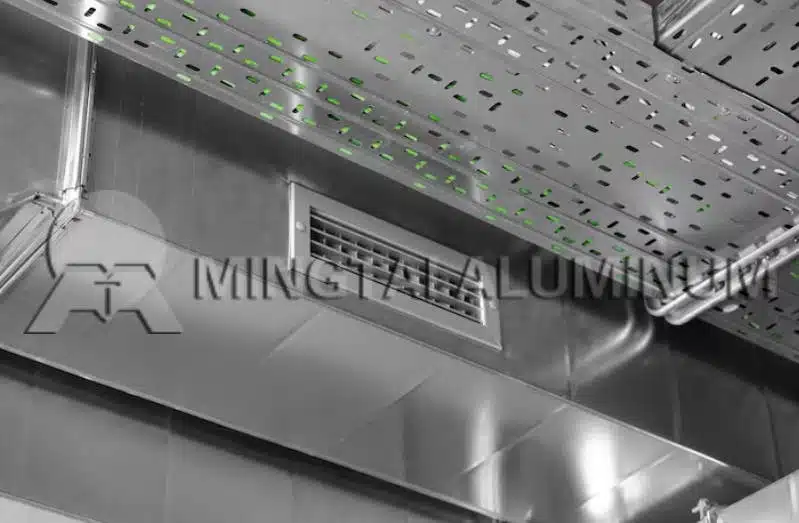
Yes, the sheet itself costs a little more than steel. But choose the right grade and thickness, and you’ll save money over the years. The trick is matching the metal to the job—how much pressure the system runs and what the building really needs.
This guide lays out the usual grades, the thicknesses people actually use, and real 2025 prices so you can decide without guessing.
Why Pick Aluminum for Ducts?
It just makes life easier:
- Way lighter than steel. Less load on the building and much easier to carry up ladders.
- Rust? It basically doesn’t. A thin oxide layer forms by itself and protects the metal forever.
- Moves heat well and bounces radiant heat away, so the whole system runs a bit better.
- 100 % recyclable, no harmful fumes, great for green-building points.
- Cuts and bends like butter compared to steel. Your shop guys will love you.
Most Common Alloys People Actually Use
1100 Series
Almost pure aluminum. Crazy easy to form, great corrosion protection, but not very strong. Perfect for small home ducts or anywhere looks matter more than strength.
3003 Series (The Everyday Choice)
This is the one you’ll see on nine out of ten jobs. A little manganese makes it stronger than 1100 while it still bends nicely and fights rust. Most shops call 3003 aluminum sheet the “go-to” or “workhorse” alloy.
5052 Series (Coastal & Tough Spots)
Best saltwater resistance and noticeably stronger than 3003. Costs more, but if the building is near the ocean or in a swampy area, it’s worth every penny.
6061 Series (When You Need Real Muscle)
Heat-treated, very strong, machines beautifully. Used when the duct has to hang heavy equipment or tie into structural steel. Doesn’t like tight bends, so it’s not an everyday pick.
Thickness People Really Use
- Normal house systems (under 1 inch water gauge pressure): 0.032"–0.040" (20–22 gauge) is plenty.
- Office and retail buildings (1–2" w.g.): 0.050"–0.063" (16–18 gauge) keeps things stiff and quiet.
- Factories and big plants (over 2" w.g.): 0.080" and thicker (14 gauge or heavier).
Thicker metal kills noise and stops the ducts from drumming, but it costs more in both material and labor. Every job is different.
Quick examples from the field:
- Houses → 3003-H14, 0.032"–0.040"
- Stores & offices → 5052-H32, 0.050"–0.063"
- Heavy industrial → 6061-T6, 0.080" and up
Real 2025 Prices (What Contractors Actually Pay)
Per pound right now:
- 1100 → around $2.25/lb
- 3003 → around $2.35/lb
- 5052 → around $2.65/lb
- 6061 → around $2.85/lb
Per square foot on normal thicknesses:
- 1100-H14 0.032" → $1.00–$1.15
- 3003-H14 0.040" → $1.30–$1.45
- 5052-H32 0.050" → $1.60–$1.80
- 6061-T6 0.080" → $2.40–$2.70
Galvanized steel (18 ga) still runs $0.85–$1.00/sq ft and stainless is $3–$4. So yes, aluminum sheet is higher upfront. But once you add easier handling, faster fab time, cheaper shipping, and almost zero maintenance, the total job cost usually comes out lower—or at least even.
Things that move the final price:
- Which alloy
- How thick
- Plain or pre-painted
- How tricky the shapes are
- How many square feet you’re buying
Getting Your Own Ducts Made
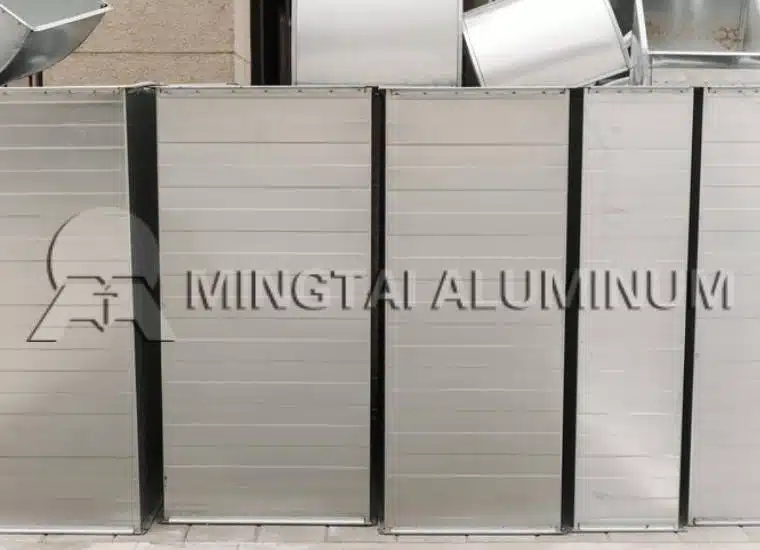
Good drawings and clean shop work are everything. Use CAD, follow SMACNA rules, and pressure-test when you’re done. That’s how you get tight, quiet systems that last.
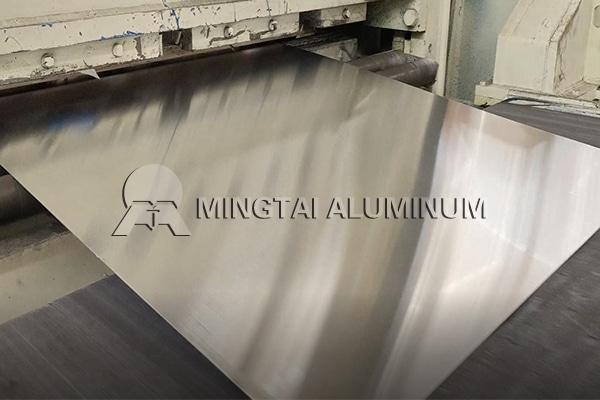
MINGTAI ALUMINUM supports your duct projects with free advice on choosing the right alloy for your job. We keep 1100, 3003, 5052, and 6061 on the floor in every thickness—foil-thin up to heavy plate—plain or painted.
Give us a call or email and we’ll walk you through options and give you a real quote that fits your project.
Ready to get the right metal for your next job? Call MINGTAI ALUMINUM at +8617737126910 | Email: [email protected] We’re here to help with specs, pricing, anything you need.
FAQ
Q: What is the best aluminum alloy grade for HVAC ductwork?
A: 3003-H14. Best mix of strength, easy bending, rust protection, and price.
Q: What thickness (gauge) of aluminum sheet should I use for residential ducts?
A: 0.032"–0.040" (20–22 gauge) in 3003 or 1100 works great and keeps the budget happy.
Q: Is aluminum sheet more expensive than galvanized steel for ductwork in 2025?
A: Sheet price is higher, sure. But total installed cost is usually the same or less because it’s lighter and way faster to work with.
Q: Can aluminum ducting be used in coastal or high-humidity environments?
A: Yes—go with 5052-H32. It laughs at salt air full of salt or chlorine.
-768x549.webp)

