When I see “T6 aluminum” on an RFQ, the price column stays blank. I pencil three question marks beside it: alloy, form, size. Only after those blanks are filled does the aluminum temper become part of an orderable material line.
What does aluminum temper mean?
What does an aluminum temper code identify?
I read the alloy first and the suffix second. One sends me to the chemistry table. Beside it, I write the condition actually requested: annealed, strain hardened, heat treated, aged, or the combination shown in the standard. That entry is the aluminum temper.
A repeated suffix does not let me copy the first alloy's property table into the next row. I also mark plate, sheet, or extrusion on the review copy. A table for one form may not apply to another.
How do alloy and temper work together in a specification?
My material line has five items before I compare offers: alloy, temper, form, dimensions, and standard. A request for 6061-T6 plate passes that first check. “T6 aluminum” does not.
If I open an aluminum 6061 temper chart, the drawing stays beside it. The chart explains the listed conditions. It cannot decide whether a proposed change suits the part, its forming work, or its machining allowance.

How are aluminum temper codes organized?
Which designation families do O, H and T represent?
O appears on annealed wrought aluminum. H is used for strain-hardened conditions. T covers thermally treated conditions that produce stable properties outside F, O, and H.
No arrows go from O to H to T on my sheet. H14 and H24 show why. H14 reaches its condition through strain hardening. H24 takes another route, with partial annealing after that work. I would not collapse the two into one line merely because both begin with H.
How should buyers read suffixes with the applicable alloy standard?
I find the table for the exact alloy, form, and thickness. Only then do I read the property limits. A familiar suffix in the wrong table is no help.
When an offer uses “equivalent,” I place the offered aluminum temper next to the drawing requirement. The standard and mill data have to explain the change. That note travels with the approval to receiving.
O, H14 and H24 aluminum tempers: code examples
How do O and H14 designate different conditions?
O is annealed. I would look at it when the part needs substantial forming. H14 is strain hardened to the subdivision commonly called half hard. At the bend review, I still need the proposed radius and material direction beside the thickness. The tooling and required result sit there too.
The 1100-H14 aluminum row stays highlighted until form, size, and standard are filled. I put the certificate requirement directly underneath. Delivery has a separate box on the quotation.
1100-H14 and 3105-H24: alloy-specific examples
On my review page, 1100 takes the left column and 3105 the right. Under 1100 I note commercially pure aluminum and H14. Under 3105 I note the aluminum-manganese family and H24. These entries follow MINGTAI ALUMINUM records.
On a 3105-H24 aluminum line, I write the coating or surface beside the size. Otherwise the material note can be correct while the finish requirement is lost. At receipt, the lot label gives traceability. Acceptance comes from the marked-up specification.
How do T6, 6061 tempers and T651 differ?
How can buyers read a 6061 temper chart and common conditions?
Four empty boxes begin this part of the sheet: O, T4, T6, T651. I copy those names from the 6061 temper chart. Values come later, after I choose the product table. Plate figures remain apart from extrusion figures, with thickness written at the top.
The O box gets “annealed,” giving me the 6061-O temper aluminum line. In the T6 box I write “solution heat treated and artificially aged” beside 6061-T6. No ranking numbers go beside these 6061 tempers; the boxes simply lead me to the correct limits.
How do 6061-T6 and 6061-T651 differ?
My T651 row begins with the T6 treatment and then adds “stress relieved by stretching.” That extra operation is what the 6061-T651 suffix is carrying. On machined plate, it becomes one item in the discussion about movement after stock is removed.
The drawing has the final word. I copy T651 aluminium temper exactly as printed. On the aluminum 6061-T651 row, the plate size and machining note sit next to it. For a 6061-T6/T651 comparison, I place both property rows under the same part requirement. Two bare suffixes would tell me almost nothing.

How should buyers specify an aluminum temper for purchasing?
Why specify alloy, temper and product form together?
Two quotations can look complete and still cover different material. I start both comparison columns with alloy, aluminum temper, and form. Size and quantity occupy the next row. Destination and date have their own cells. Any operation that changes the work is written beside the relevant dimension instead of being buried in a closing list.
If another condition is offered, I separate the questions. Purchasing can look at lead time and cost. Engineering reviews the drawing and the proposed substitution. The approval record shows both answers.
Which property and documentation requirements should buyers state?
I mark the properties and tolerances that control the part. The same page names the inspection method, certificate, traceability, and test direction where the standard requires one.
The suffix cannot explain every shop result. A bend still has a radius, direction, and tool. If a plate moves during machining, the material condition is only one line in the investigation. I use the certificate to identify the incoming material and the part inspection to record what happened after processing.
Which aluminum temper options does MINGTAI ALUMINUM offer?
Which 6061 plate options include T6 and pre-stretched T651?
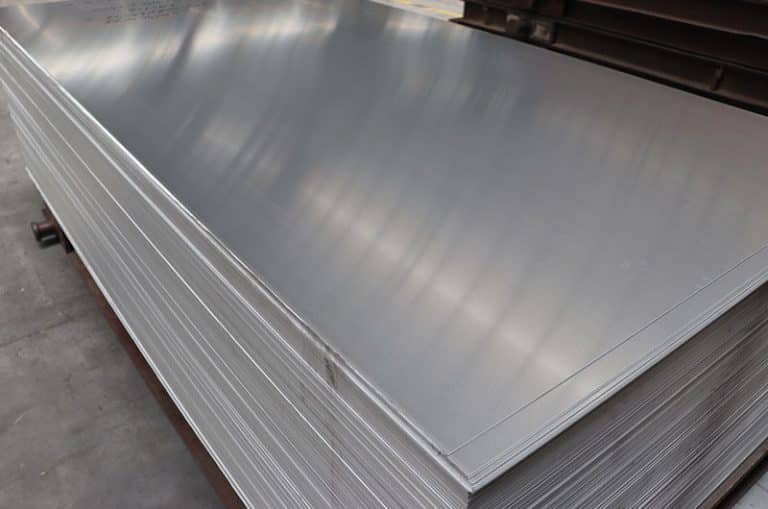
The 6061 worksheet has one row for T6 and one for pre-stretched T651. MINGTAI ALUMINUM lists 6061 plate for molds, automotive parts, and precision machining in those conditions. In the margin I write the recorded limit: up to 500 mm thick and 2,650 mm wide.
Those numbers are enough for an initial fit check; no metal is reserved by writing them down. The offer from MINGTAI ALUMINUM must bring back the requested aluminum temper, size, and mill-test requirement. I keep the aluminum 6061 temper chart in the reference file, away from the stock column.
Which 1100-H14 plate and 3105-H24 sheet sizes can buyers request?
The next two rows are different products. For 1100 plate in H14, MINGTAI ALUMINUM records 8–500 mm thickness and 500–2,650 mm width; radiators appear among the recorded uses. For 3105 sheet in H24, the recorded range is 0.1–500 mm by 100–2,650 mm, with building and decorative sheet among the uses.
I attach order details to both product rows. The 1100-H14 aluminum entry gets size and quantity. The 3105-H24 aluminum entry gets those details plus the surface or coating, which can disappear in a generic sheet request. Shared notes remain below the pair.
FAQ
Q: Can two aluminum alloys share the same temper code?
A: Yes. If the same aluminum temper suffix appears after two alloy numbers, I still open two property tables. Each alloy keeps its own row.
Q: Is 6061-T6 the same as 6061-T651?
A: No. I underline the added stretching stress-relief step on the T651 row. The T6 row has no such underline. Product specifications and mill data decide whether either line fits the order.
Q: What information is needed to order aluminum in a specific temper?
A: My request opens with alloy, full aluminum temper, and product form. Size and quantity occupy the next line. Standard, controlling limits, date, and documents follow. I write any machining or finish note beside the dimension it affects rather than dropping it into a final catch-all list.