What Is Aluminum Sheet? (Quick 2025 Overview)
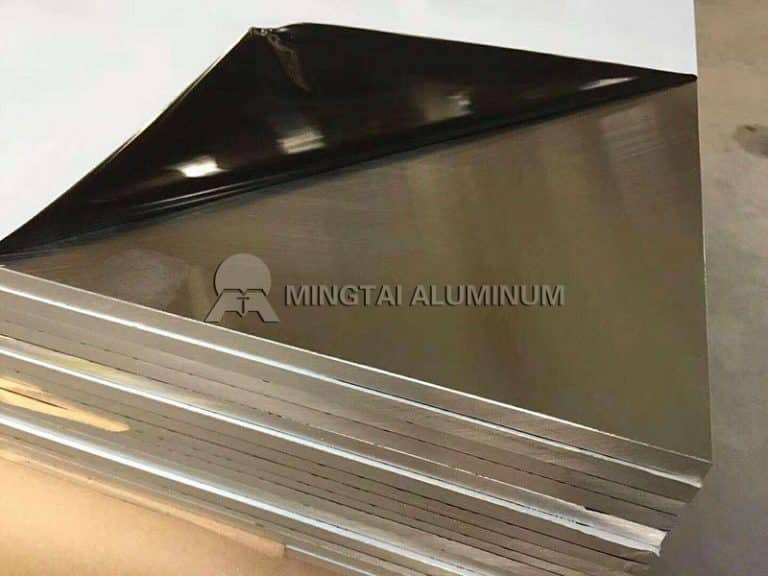
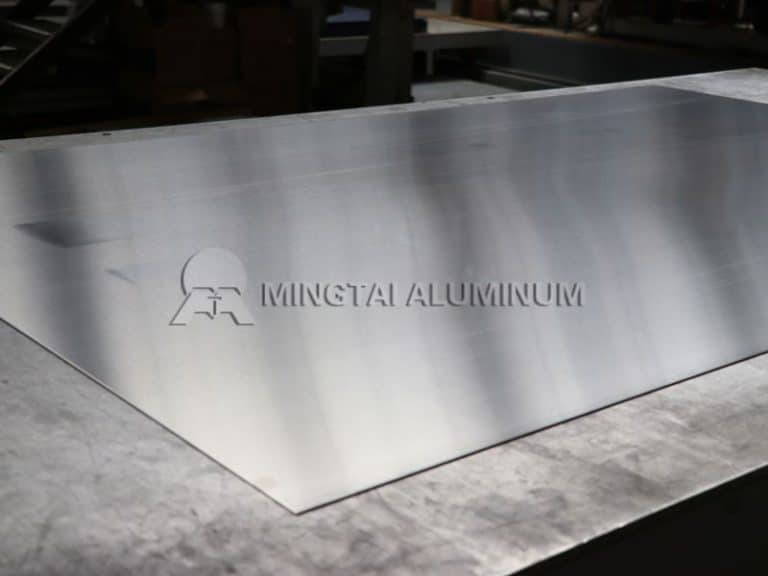
Aluminum sheet isn’t particularly mysterious—it’s just aluminum rolled flat until it reaches a usable thickness, usually somewhere between 0.2 mm and several millimeters. Most of it begins life as a thick billet; then it gets pushed through rolling mills again and again. If you’ve ever been in a fabrication shop, you’ll know the look: long rows of sheet leaning against a wall, some wrapped, some not, a few with smudges from someone’s gloves. No one fusses too much about that on mill finish stock.
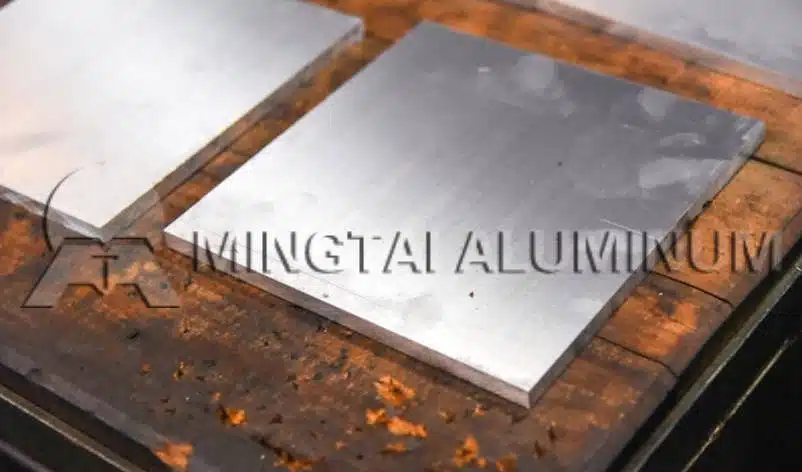
It’s popular for everyday reasons. It doesn’t rust the way steel does, it’s light enough to carry without a crane, and it bends—well, depending on the alloy. Some alloys behave like foil. Others, like 6061-T6, feel like they have an attitude problem when you try to form them too sharply.
By 2025, its use keeps growing. EV makers want lighter housings, building companies prefer it for cladding, and packaging lines rely on it for food-safe products. A few industries—marine, aerospace, transportation—never really stopped using large quantities of aluminum, so the trend isn't new, just stronger now.
Types of Aluminum Sheets in 2025
Types by Alloy
1100 / 1050
Pretty soft, very formable. Some kitchen equipment factories almost survive on these alloys alone.
3003 / 3004
Good for folks who want something easy to handle but a bit stronger than pure aluminum. Roofing and interior panel shops buy it constantly.
5052
Marine workers swear by it. It holds up in salty air and damp warehouses without turning blotchy.
6061
Probably the most widely used alloy in machine shops. If you look around any CNC room, you’ll find offcuts of 6061 lying around.
7075
Strong enough that people sometimes forget it’s aluminum. Used where failure isn’t an option.
Types by Temper
O, H14, H24—these all speak to how much the metal was cold-worked. Softer tempers fold nicely; harder ones stay rigid.
T4 and T6 mean heat-treated. T6 is noticeably stiffer. You can feel it when clamping it into a brake—almost like it’s arguing with you.
Types by Surface Finish
Mill finish: Slight shine, a bit dull, but honest.
Brushed: The grain looks controlled, like someone combed it.
Anodized: Clean, stable, and outdoor-friendly.
Painted / coated: Often arrives on pallets with protective film.
Embossed: Diamond plate—the stuff seen on truck toolboxes.
Types by Use
Structural: Machine frames, small fixtures, support brackets.
Marine: Decking, hull sheets—mainly 5052 or 5083.
Food-grade: Containers, pans, industrial kitchen equipment.
Automotive: EV housings, trailer skins, inner panels.
Aluminum Sheet Thickness Guide
Gauge vs Actual Thickness
Gauge numbers get thrown around a lot in workshops. Larger number means thinner sheet—a little counterintuitive but people still use it out of habit more than logic.
10 gauge → 2.59 mm
16 gauge → 1.29 mm
20 gauge → 0.81 mm
Standard Thickness Ranges
Thin (<0.5 mm): Reflectors, packaging.
Medium (0.5–2 mm): Wall panels, car skins.
Thick (2–6 mm): Machinery panels, structural bits.
Heavy (>6 mm): Marine plates, heavy supports.
Thickness Selection for Specific Applications
Architecture: 1–3 mm works most of the time.
Vehicles: 1–2 mm for skins; 2–4 mm on some trailer builds.
Machinery: 3 mm or more feels safer.
Packaging: Under 1 mm.
Aerospace: All over the place—anything from foil-like skins to hefty 7075 plates.
Aluminum Sheet Prices in 2025
Key Factors Affecting Price
Prices move with alloy, finishing, thickness, and global aluminum cost. The aluminum sheet manufacturing process also plays a part here, since every rolling and annealing step adds its own cost. Shops that buy regularly from large suppliers—MINGTAI ALUMINUM being one of the well-known high-capacity producers—often see steadier numbers simply because big mills plan production differently.
Many purchasing teams do a quick “price refresh” before each order. It’s not paranoia; the market shifts often enough to justify it.
Price Ranges by Alloy
3003: Usually the affordable option.
5052: A bit more expensive for the corrosion resistance.
6061: Higher because of strength and machinability.
7075: Premium material—no surprise there.
Price Comparison
Aluminum tends to beat stainless steel when total project cost is considered. Lighter, faster to cut, easier on tooling.
Chinese producers—including MINGTAI ALUMINUM—typically quote competitive numbers because of mature supply chains and large-scale smelting.
Aluminum Sheet Cutting Methods
There are some cutting methods for aluminum sheet below:
Mechanical Cutting
Shearing gets fast, straight cuts. Good for rectangles and anything where you don’t need fancy curves.
CNC routing shoulder-loads the fancy shapes.
Thermal Cutting
Laser cutters leave tight edges and stay pretty quick.
Plasma cutters? Louder, hotter, but great for thicker material.
Cold Cutting
Waterjet cutters slice without heat, which some industries insist on when surface quality matters.
How to Choose a Cutting Method
Laser for thin stuff.
Waterjet or plasma for thick.
CNC if accuracy matters.
Shear if money matters.
Waterjet again if the surface finish is the main concern.
Aluminum Sheet Applications Across Industries
Construction & Architecture
Cladding, ceiling tiles, exterior facades—aluminum is everywhere. Lightweight sheets mean installers don’t struggle as much during long days on scaffolding.
Automotive & Transportation
5052 and 6061 show up in trailers, battery modules, brackets, and paneling. Trailer shops often use 1.5–3 mm sheets because they’re easy to cut and replace.
Aerospace / Defense
Many load-bearing aerospace components rely on 7075. It’s not the easiest material to work with, but it’s strong enough to justify it.
Consumer & Industrial Manufacturing
Lighting fixtures, small enclosures, machine guards—3003 and 5052 make up most of this category.
Packaging & Food Processing
Cookware factories, foil manufacturers, and food container producers rely heavily on 3003.
How to Choose the Right Aluminum Sheet in 2025
The choice usually revolves around a few questions:
Will it see moisture?
Does it need to bend sharply?
How much vibration will it see?
Is the surface appearance important?
What cutting tools are available in the shop?
If those answers match the alloy and thickness, you’re on the right track.
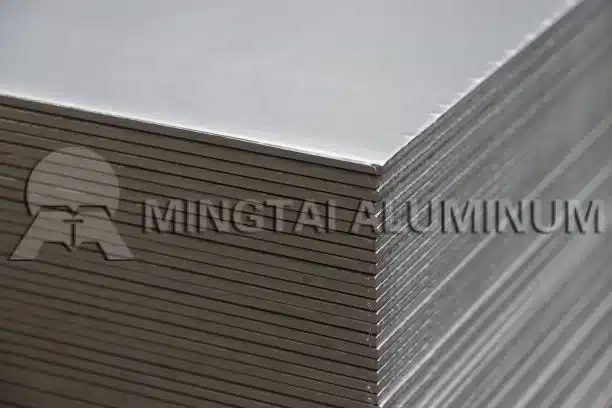
Aluminum sheet remains one of the practical materials for 2025—lightweight, workable, stable in tough environments. Whether it becomes part of a building, an EV tray, or a marine deck, matching alloy and thickness to the job always pays off. Reliable manufacturers—like MINGTAI ALUMINUM, with their larger production lines—play a big part in keeping quality predictable. Industries pushing for lighter designs and cleaner manufacturing will continue leaning toward aluminum sheet for years to come.
FAQ
Q: What are the most popular aluminum sheet alloys in 2025?
A: Common choices include 3003 for forming jobs, 5052 for marine or outdoor projects, 6061 for machined parts, and 7075 for high-strength aerospace pieces.
Q: How should thickness of aluminum sheet be chosen?
A: Under 1 mm for packaging, 1–2 mm for automotive or architectural skin panels, 2–6 mm for machinery parts, and above 6 mm for marine and heavy structural work.
Q: Why do aluminum sheet prices vary?
A: Alloy composition, finishing steps, certifications, order volume, and raw aluminum costs all influence pricing. Large producers like MINGTAI ALUMINUM usually maintain steadier pricing because of better-controlled production runs and bigger capacity.