Aluminum sheets show up everywhere these days. Think cars, airplanes, buildings, even gadgets. People like them because they're lightweight but still hold up strong. They don't rust easily and handle heat and electricity pretty well. That said, turning raw aluminum into good sheets can be a real pain. It oxidizes super fast and lets heat zip through it. Getting clean, flawless pieces takes careful handling, the right gear, and folks who know what they're doing.
What makes aluminum special? It's not heavy, yet it's tough. It stretches without snapping too quick. Good at carrying current and staying cool under heat—or hot, depending. It even shrugs off radiation. Perfect for serious applications. But yeah, those perks turn into headaches on the shop floor. Want reliable sheets? Deal with the quirks directly. Stay on top of every step. Team up with pros who get the metal inside out.
Top Challenges in Aluminum Sheet Manufacturing: Best Practices for Reliable Results
Building aluminum sheets means a bunch of key jobs. Cutting them. Shaping them. Welding pieces together. Finishing the surfaces. Every one comes with its own set of headaches. The stuff is softish and reacts quick. Mess up, and you get twists, breaks, or parts that won't stick.
For strong results and fewer headaches in production, stick to proven ways all the way through. Pick the best alloy upfront. Check everything carefully at the end. Hold tight on sizes and keep quality even. You'll need solid machines, trained hands, and real quality checks.
MINGTAI ALUMINUM brings over 20 years on the job, solid tech, and certified products worth trusting. Experience like that matters a lot. It helps navigate the tricky parts while staying within rules.
Handling That Pesky Oxide Layer
One thing that always pops up? The oxide layer builds quick. Air hits aluminum, boom—thin coat forms right away. Good news: it stops deeper rust. Bad news: big trouble for joining or coating.
This layer needs way more heat to melt than the metal below. Welds or brazes end up weak. Skip proper cleaning, and you get tiny holes or shaky bonds.
Start with thorough cleaning. Brush it mechanically. Or hit it with chemicals meant for aluminum. When welding, keep oxygen out. Gases like argon or helium do the trick. No new oxide midway.
The aluminum plate of the anode is oxidized, and a thin layer of aluminum oxide is formed on the surface, with a thickness of 5 to 20 microns, and the hard anodized film can reach 60 to 200 microns. Figuring this out lets teams pick smart prep and shields.
Coping with Fast Heat Spread and Warping
Heat races through aluminum. During welding or laser cuts, it vanishes quick. Handy in some spots. Not so much when it warps things, burns holes, or heats unevenly.
Cut risks by preheating first. Evens out big temp swings. Clamp it down or add heat sinks to lock the shape. Tweak your machine settings. Ease up on heat. Nail the speed.
Monitor with sensors or cameras. Catch issues early. All this keeps shapes true. Less rework or trash.
Dodging Cracks and Bounce-Back When Bending
Bending aluminum? Often tricky. It doesn't give as much as other metals. Too much push, cracks appear. Or it springs back some after you let go.
Go for bend-friendly alloys. Like the 5xxx family—they strike a nice balance of tough and flexible.
High strength, plasticity and corrosion resistance are desirable traits that help reduce cracking during fabrication. Looser curves help. So does lube to ease friction. Try fancier ways like hydroforming or slow bends. Overbend a touch to fight the spring.
Nailing Clean Cuts Without Rough Edges
Precise cuts on aluminum aren't straightforward. It's shiny and soft. Lasers bounce or soak unevenly—rough edges, gunk buildup. Old-school shearing or sawing? Burrs and bends if you're off.
Better bet: fiber lasers with short waves. They grab onto shiny stuff. Blast nitrogen to shove melt out clean. Fewer burrs.
Finish by deburring or smoothing. Dial in speed, focus, power for steady work.
MINGTAI ALUMINUM brought in a six-high cold rolling mill from Germany's SMS. They make super-wide and thick plates—up to 2650mm wide, 500mm thick. Stress gets worked out. No warping on cuts. That stress control boosts edge quality big time.
Getting Strong, Trustworthy Welds
Everybody knows welding aluminum is rough. Oxide, bad melts, pores, hot cracks. Match the method to thickness and task.
Thin stuff needing detail? TIG (GTAW) shines. Thicker, faster needs? MIG (GMAW) steps up. Pick filler that fits the base—stronger joins, fewer cracks.
Shield with argon mixes to keep air away. Pulse mode for tighter heat control.
Bring in welders who really know aluminum. Cuts flaws. Builds joints that hold up long-term.
Why Real Know-How Counts in Aluminum Sheet Work
Machines alone won't cut it with aluminum sheets. You need solid understanding from start to finish. Sourcing good stuff to last checks.
The raw materials are of high quality. We purchase aluminum ingot raw materials from large manufacturers to ensure product quality from the source. Quality inputs set up success early.
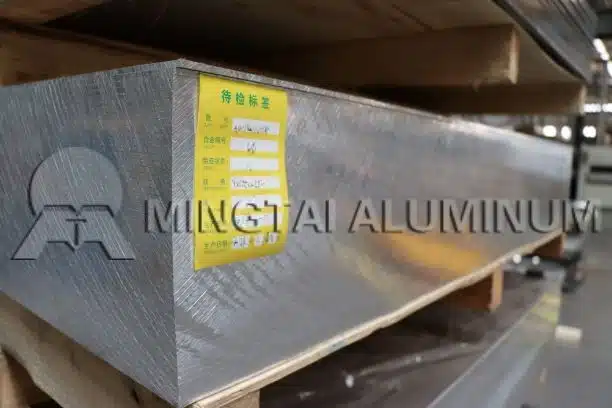
MINGTAI ALUMINUM runs as a big listed aluminum alloy firm. We focus on sheets, coils, foils. Cover 1 through 8 series grades. That range lets them customize for whatever the job needs.
Few in China handle ultra-wide and thick plates like they do. Shows serious tech muscle and grasp of modern demands.
Pair up with teams packing advanced kit—like those six-high mills—and deep insight. Beat the built-in hurdles. Get smoother ops, less waste, tougher parts, and peace of mind on big projects.
FAQ
Q: What are the main challenges in the Aluminum Sheet Manufacturing Process?
A: The primary challenges include managing the rapid formation of an oxidation layer, controlling high thermal conductivity leading to distortion, preventing cracking and springback during forming, achieving precise cutting with minimal burrs, and ensuring strong welding without porosity or cracking.
Q: How does oxidation affect the Aluminum Sheet Manufacturing Process?
A: Aluminum quickly forms a thin oxide layer when exposed to air, which has a higher melting point than the base metal. This can cause poor fusion in welding, porosity, or weak bonds, requiring thorough surface cleaning and inert gas shielding to overcome.
Q: Why is thermal conductivity a key issue in the Aluminum Sheet Manufacturing Process?
A: Aluminum's high thermal conductivity causes rapid heat dissipation, leading to warping, burn-through, or uneven heating during welding, cutting, or forming. Solutions involve preheating, clamping, heat sinks, and optimized parameters to maintain stability.